



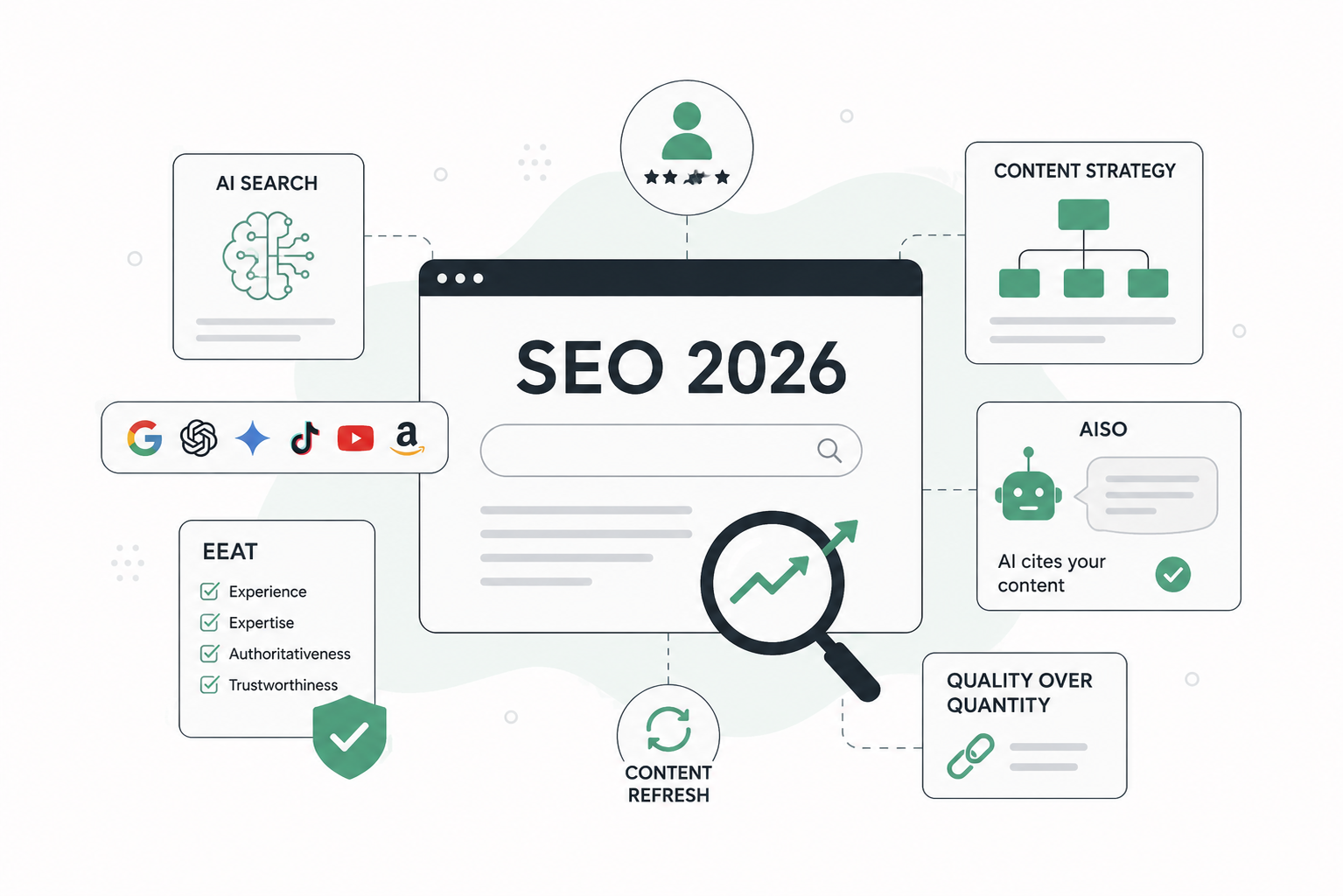
The user journey in 2026 has undergone significant transformation, fundamentally altering the SEO landscape. Information discovery now extends far beyond traditional search engines, with artificial intelligence and chatbots becoming ubiquitous. Industry experts increasingly emphasize concepts like EEAT and AISO, signaling that the era of rudimentary, manipulative SEO tactics is officially over.
To navigate these shifts, Valeria Masliuchenko, an SEO specialist at mr.Booster, shares critical observations on how search is evolving and how professionals can adapt.
Beyond traditional search engines
While Google remains a dominant platform, users no longer rely on it exclusively. A growing demographic discovers products, services, and answers via AI tools like ChatGPT, Gemini, and Perplexity. Younger audiences frequently treat TikTok, Instagram*, Reddit, and YouTube as primary search engines. For commercial queries, many bypass traditional search entirely, heading straight to Amazon, marketplaces, or review sites.
SEO now requires creating content that both search algorithms and AI systems can easily comprehend. Furthermore, brands must establish a consistent, cohesive presence across all platforms where their target audience seeks information.
How artificial intelligence is reshaping search
AI has fundamentally altered information retrieval. Conversational interactions with neural networks are becoming as routine as typing a query into a standard search bar. This shift forces search engines to process and present information differently.
AI is no longer just a tool for generating content; it actively evaluates it. Modern AI crawlers analyze context and alignment with user intent rather than merely counting keyword occurrences. Consequently, thin content created solely for search engine manipulation is easily identified and deprioritized. Content that thoroughly explores a topic, demonstrates genuine expertise, and provides comprehensive answers now receives preferential ranking.
Understanding AI search optimization (AISO)
AI Search Optimization (AISO) represents a new frontier in digital marketing. While traditional SEO aims for top positions in standard search engine results pages (SERPs), AISO focuses on increasing the likelihood that AI bots will discover, reference, and cite a brand or its content in generated responses.
Users ask AI detailed, conversational questions and expect complete answers with proper context and source citations. Therefore, AI systems heavily favor well-structured content that directly and clearly addresses specific user queries.
Crafting content for both AI and human audiences
Optimizing for AI does not mean sacrificing human readability. In fact, the two are now deeply aligned. Users prefer content written in clear language with logical structures that genuinely solve their problems, and AI evaluation metrics mirror these preferences.
Short paragraphs, descriptive headings, bulleted lists, relevant visuals, and strategic internal linking enhance comprehension for both human readers and AI systems. Furthermore, AI highly values original thought. Case studies, proprietary research, expert commentary, and authentic practical examples serve as strong signals of content value and uniqueness.
Prioritizing expertise over content volume
Search algorithms have become highly adept at distinguishing genuine expertise from mere keyword saturation. Producing dozens of loosely related, shallow pages is no longer an effective strategy.
Modern SEO requires a clustered content architecture. This involves creating a comprehensive pillar page covering a broad topic, supported by detailed sub-pages exploring specific nuances. Strategic internal linking connects these assets, helping search crawlers understand the semantic relationships while guiding users seamlessly through the subject matter. This approach demonstrates deep topical authority rather than a scattered collection of articles.
The imperative of continuous content refreshing
Regularly updating existing content is a powerful ranking lever. Refreshing outdated statistics, replacing obsolete examples, expanding sections, improving internal links, and adding new expert insights can significantly boost a page’s visibility without the need to author a completely new article from scratch. Routine content audits must become a non-negotiable component of any modern SEO strategy.
Aligning perfectly with search intent
Every webpage must precisely match the underlying intent of the user’s query. Informational searches require comprehensive guides and reliable descriptions, whereas commercial queries demand product comparisons, pricing, and clear specifications.
Users should grasp the core message of a page immediately, without excessive scrolling or navigating through distracting elements. Clear headings, concise introductions, logical formatting, visual aids, FAQ blocks, and thoughtful internal linking facilitate rapid information retrieval.
more value than accumulating hundreds of low-quality or irrelevant backlinks.
Adapting SEO strategies for 2026 realities
To remain competitive, brands must adopt a long-term SEO strategy that seamlessly integrates technical optimization, expert-level content, brand development, and a profound understanding of user intent. The era of optimizing isolated pages solely for SERP positions has ended.
In practice, this requires:
- Cultivating deep thematic expertise rather than merely inflating content volume.
- Producing original research, unique case studies, and proprietary materials instead of rehashing existing information.
- Building a robust brand presence in parallel with technical SEO efforts.
- Measuring success through tangible business outcomes, not just search engine rankings.
Summary 📌
The SEO landscape in 2026 is defined by the rise of AI-driven search and evolving user behaviors that extend far beyond traditional search engines. Success now hinges on AI Search Optimization (AISO), which prioritizes creating highly structured, expert-level content that both humans and AI systems can easily understand and cite. Key strategies include adopting a clustered content architecture, rigorously applying EEAT principles, focusing on high-quality backlinks, and continuously refreshing existing assets. Ultimately, a sustainable SEO strategy must align technical execution with genuine brand authority and measurable business results, moving away from outdated, volume-based tactics.